The LCBO’s Social Responsibility group is in the news again, this time for the rejection of the Flying Monkeys Smashbomb Atomic IPA. Torontoist has an article posted today about the story, with examples of some of the past controversies of other products that aren’t on LCBO shelves due to similar issues. Over at The Bar Towel there is a discussion forum thread where beer lovers in the province have piped up, including Flying Monkeys owner Peter Chiodo himself. Both are worth a read to learn about this important issue and how the LCBO continues to flex their muscle in the beer world in Ontario – when beer itself isn’t even concerned. I’ve said it before folks, don’t forget the “C” in LCBO stands for “Control”. Extra shout out to Torontoist for recalling and linking to our Buffalo/Blue Monk bus trip article, in which Free Our Beer was discussed.
In similar news, and which shows a total contrast in brewery attitude in the United States, the Flying Dog brewery of Frederick, Maryland has sued the Michigan Liquor Commission over their banning of their Raging Bitch brand, citing freedom of speech rights. Looks like numerous flying animal breweries are having issues with the regulators this week.
As much as we applaud the efforts of Ontario brewers to push things further, the moves by Flying Dog are certainly ballsy and we probably wouldn’t see this kind of manoeuvre by a brewer here. As the LCBO is the only (realistic) channel for craft beer, if bridges are burned in Ontario, which could be entirely possible with a Flying Dog strategy, a brewer here could be out of luck with no other options. And that’s really the core problem with our retail system in this province.
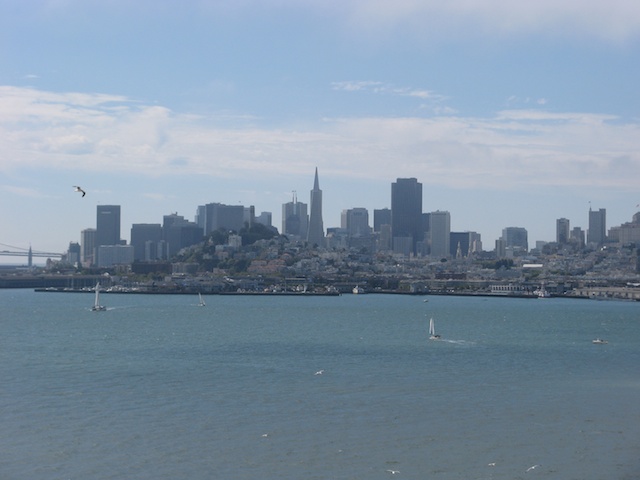
Free Our Beer is hitting the road again tomorrow for the annual Craft Brewers Conference, this year taking place in San Francisco, California.
California is one of the great brewing states and San Francisco is one of the great beer cities, with a diverse selection from within the state, across the country and abroad. Private stores are permitted and grocery stores can sell beer. Draught selection is top-notch with beers from all over available. It’s a model for a great brewing and beer retailing environment. We’re very much looking forward to heading down there again and chatting with brewers from Ontario and elsewhere about how we can bring some of the positive Californian ways home.
You can read The Bar Towel‘s preview of the Craft Brewers Conference here – Part 1 and Part 2. Follow us on Twitter for real-time updates. Check out a few of Free Our Beer’s past posts on California here and here.
By now you have certainly seen Ontario media abuzz with the news that the Ontario government is “updating” our liquor laws and “removing restrictions on Ontarians”. The restrictions that are being considered for elimination – note they have not been removed yet – include dropping the need for beer tents and allowing freer movement with drinks at festivals, extending special event serving hours, allowing all-inclusive Ontario vacation packages.
Keep in mind this is only a “consultation”. This is similar to what happened in 2005, when the Ontario Government commissioned a panel to review the alcohol system. However, after the panel found that consumers would benefit from increased competition in the retail environment, the review findings were quickly dismissed. But, any sign pointing towards positive change is a good thing so we welcome this news from the Government.
Just to reminisce for a moment, this news reminded me of something that happened way back in the 1990s, when the Ontario Government announced, without prior warning, that the drinking hours would be extended from 1 a.m. to 2 a.m. I was in university at the time, and loved the change. So did most. And it’s still with us, and hasn’t made society worse off, as some suspected back then. It was the kind of change that just made sense.
These current proposed changes are also ones, that if implemented, make sense. For anyone who’s been to a concert festival on the Toronto Island, it sucks. The beer tents have massive lines and are always frustrating. All-inclusive vacations and extended wedding drinking hours – sure, sounds good. But these are considerably smaller changes than what was happened in the ’90s, but in this digital era there has been a lot of talk very quickly from praise to pessimism that it is just an election campaign ploy.
But in Ontario we take what can get from the government when it comes to alcohol regulation change. After all, the government has been watching over booze for decades since Prohibition – they still are our exclusive retailer of wine and spirits through the L.C.B.O. and they created a single retail outlet for beer with The Beer Store that is owned by the all foreign-controlled Molson, Labatt and Sleeman. Private companies cannot create their own retail outlets. All alcohol imported into the province goes through the L.C.B.O. and governed their rules. You can’t buy beer at the corner store or grocery stores and you can’t have a picnic at a park with a six-pack of beer. The list goes on.
Hopefully, this latest news should spark something very important if we hope to achieve change in Ontario. And that is that alcohol needs to be a treated as a political issue in the province. It should be thought of in the same vein as the economy, education, health care and others. Only by having alcohol on the table as an issue that needs to be addressed alongside other important ones will we ever hope to fix our system. It is the Government alone who has the power to change Ontario’s liquor laws and allow for private competition in retail.
I’m hopeful that it will stick this time. In 2007 I made a plea to consider beer as a political issue in the election, and it was re-printed in The Toronto Star:
Our beer system is awful, plain and simple. To think that corner stores would only sell macro beers is not giving them enough credit. Open up the system, and see what happens. There’s Future Shop, but there’s also independent specialty computer retailers on College. There’s McDonald’s, but there’s also great restaurants around town. There’s Ikea, but there’s also boutique furniture shops. You get the idea. Specialty can co-exist with big, mass-focused retail. If corner stores were allowed to sell craft beers, I would personally open a Bar Towel convenience store in Toronto and I think I would be pretty successful. I wouldn’t be the only one. The system has to change and I wish this was more of an issue, but it isn’t.” – Cass Enright, on BarTowel.com, a local website for beer aficionados, responding to PC Leader John Tory musing about allowing specialty beer and wine stores
Unfortunately it was not an issue in the last election, but there’s a lot more talk about it this time around. And now the Government wants to hear from you. As part of the consultation for the proposed rule changes, the Ministry of the Attorney General “wants to hear your suggestions about how liquor laws in Ontario can be modernized.” This is huge. If you feel that our alcohol system can improve in Ontario (and if you’re reading Free Our Beer you probably do), then speak up. Write a letter or e-mail them. These kind of opportunities don’t come around very often. This is your chance to be heard. If you don’t like how the private ordering system works, say so. If you believe The Beer Store under-services craft beer, write it down. If you want to have competition in the marketplace when it comes to alcohol retail, tell them. Demonstrate your belief that Ontario can be a better place with serious change in how alcohol is treated in the province. I certainly will, and I hope you do too.
The Ministry is accepting submissions until March 17, 2011, by email at consultwithus@ontario.ca or by mail at: Ontario Consultations, 720 Bay Street, 7th floor, Toronto, ON, M7A 2S9. Don’t let this opportunity pass.
There is a story in the National Post that Tim Hudak, leader of Ontario’s Progressive Conservative party, was discussing how pricey beer was, referring to the minimum retail price that the LCBO sets for beer in the province. What isn’t discussed in the article, however, is that the LCBO has in fact released in the last couple of months its most expensive beers ever. But we believe that’s a good thing for beer connoisseurs in Ontario.
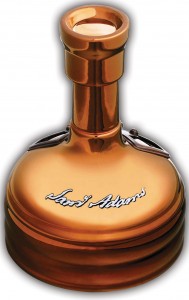
The last few months has seen a slate of beers released by LCBO with prices unseen on shelves in the past. As part of the Harviestoun brewery feature, Ola Dubh 40 was sold for $18.95 per bottle. In the recent Norrebro brewery feature, Little Korkny Ale is selling for $21.95 per bottle. The upcoming Sam Adams Infinium will be sold for $14.95 per bottle. And the mother of them all, the Sam Adams Utopias lottery offered 70 bottles at a walloping $115 per bottle.
Not only are we seeing more and more super-premium beers with prices to match, but we’re seeing something just as remarkable. They are all selling. Fast.
Why is this a good thing? Well, its indicative that the Ontario beer drinking market is accepting to more premium-priced beers, which bodes well for the mission of Free Our Beer. You see, if we are to be successful with a goal with any form of private beer retail – drinkers will need to pay higher prices for good products.
We’ve been blessed in Ontario with some of the best prices around for premium products. Just this past Winter Warmers release saw Aventinus Eisbock sell for $4.25/bottle, St Bernardus 12 for $3.45/bottle and Traquair Jacobite Ale for $2.80/bottle. Incredible prices, really. But that’s what you get with the LCBO, “one of the largest single purchasers of beverage alcohol in the world”. With that kind of buying power comes negotiating strength, especially when you’re the only game in town for wine and spirits, and basically the only game for premium beer.
What would happen if there were private retail? Imagine for a second a cool specialty beer store on Queen Street (I certainly could). They could stock all kinds of funky stuff from Canada and abroad, free to bring in unique one-offs to satisfy even the most discerning connoisseurs. This would be awesome and many drinkers could agree.
But this would also be a store that could only order smaller quantities of beer, thereby raising freight costs. And small orders would hinder buying power, further raising costs. And the lack of scale efficiencies like a large organization would have could lead to various other overhead costs. That would all result in bottles of beer that are higher than what we see at the LCBO currently. Go to any private store in the US or Canada and you see this. This past weekend I was in a small bottle shop in Quebec City and they were selling beers from its own province for upwards of $25 per bottle. In the US domestic premium beer often sells for $10+ per bottle, and that’s not even looking at the imported brands.
The LCBO has been doing some good things recently to push craft beer forward, and one of these initiatives is testing the waters with these super-premium and expensive brands. And this test is scoring an A+, as evidenced by thousands of entrants into the Sam Adams Utopias lottery and Norrebro hardly being able to stay on the shelves.
Our attention shouldn’t be on the cheap beer, but on the expensive stuff. It’s having Ontario beer drinkers increasingly more comfortable with paying for quality that will help beer connoisseurs in the long run.
As we reach the end of 2010 I’d like to discuss what I called the best event I attended this year – the Craft Brewers Conference (CBC) in Chicago, Illinois.
In April I went for the first time to the CBC, the annual conference of the Brewers Association (BA), a U.S. organization comprised of over 1,000 brewers, thousands of homebrewers, beer distributors and others in the business or interested in it. It is the largest of its kind in the U.S. and seeks to “promote and protect small and independent American brewers, their craft beers and the community of brewing enthusiasts.”
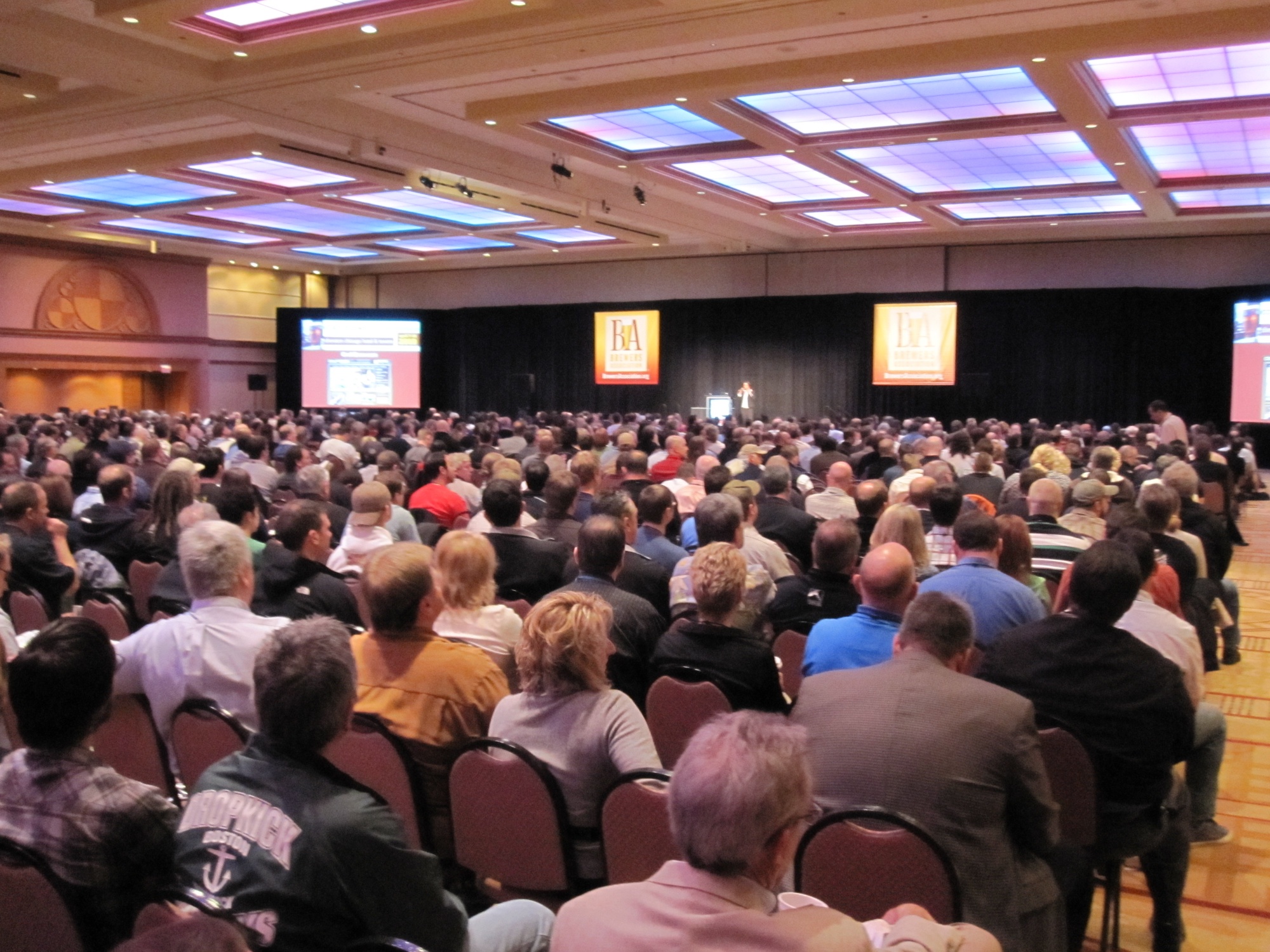
Keynote Speeches at the CBC
Upon arriving at the conference I was immediately impressed with the camaraderie and support amongst the members of the BA. The Association exists on both national and regional levels, representing craft brewers from the largest to the smallest operations. The BA counts in their membership Boston Beer (Sam Adams), the largest craft brewery in the U.S., plus heavy hitters including Brooklyn, Dogfish Head, Anchor and Sierra Nevada, but also small players such as Caldera, Dust Bowl and Hoster. The BA is for all craft brewers in the United States.
The big-picture thinking and goals of the BA is impressive. The keynote speeches at the start of the conference discussed the governmental initiatives the BA is spearheading – namely to reduce the taxes for small brewers (legislation HR 4278). The BA is organized and connected – two congressmen were present to discuss how they were pushing the U.S. government for change. It was exciting to see how the BA has been able to bring and keep so many brewers from across the U.S. together – as Steve Hindy from the Brooklyn Brewery put it, “Disunity is bad for beer”.
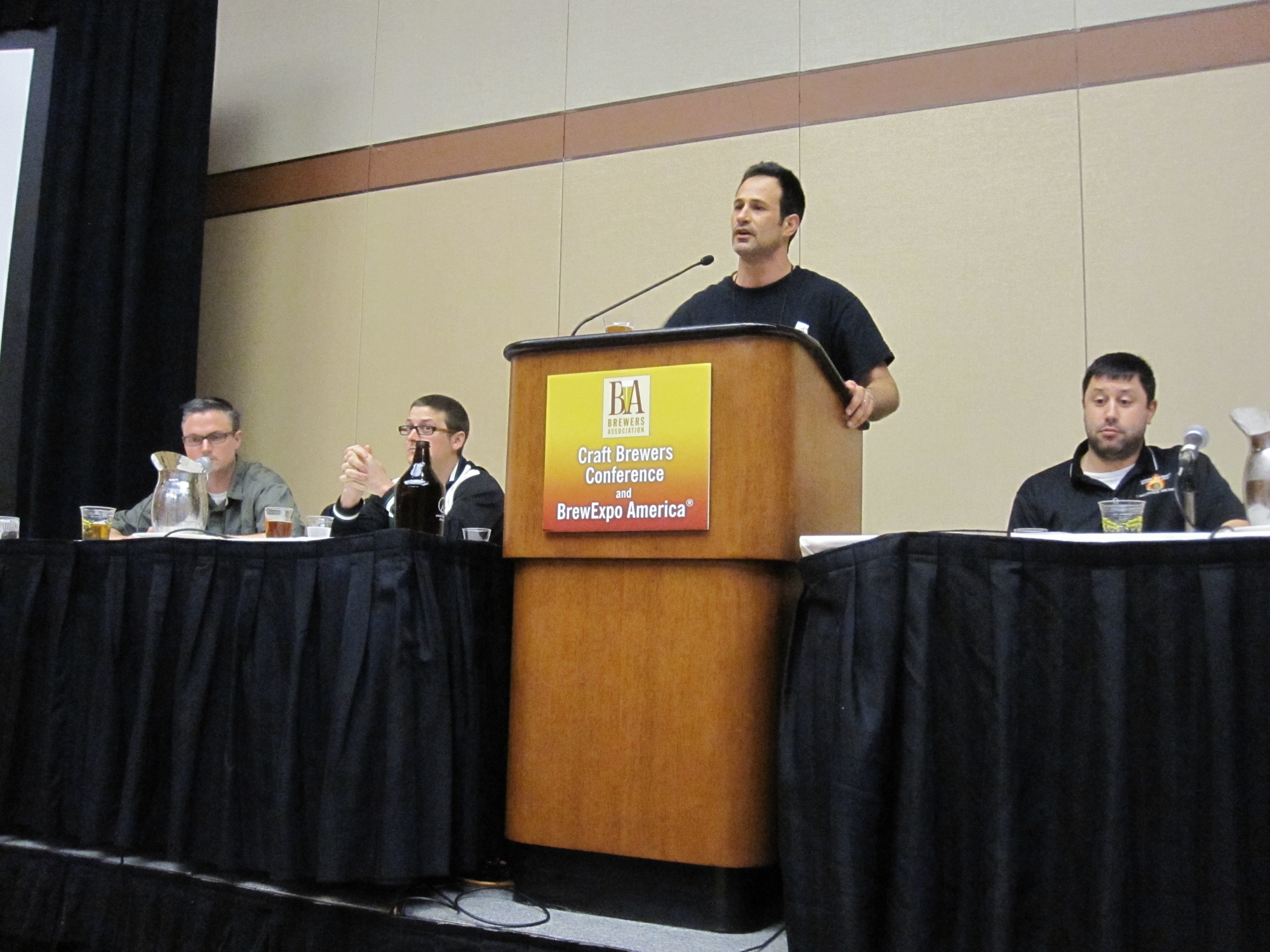
The 3-day conference was simply a whirlwind. Its home base was the Sheraton Hotel, where a trade show (BrewExpo America) and seminars took place throughout each day. Seminar topics were diverse and covered numerous topics of the business – including brewing, marketing, social media, technical issues, governmental affairs and sustainability. Many of the big names of the U.S. craft beer scene were there to present or participate, including Greg Koch of Stone, Sam Calagione of Dogfish Head, Vinny Cilurzo of Russian River and many others. It was informative and exciting hearing all the U.S. craft brewers talk about their business and brewing successes and challenges.
After the seminars wrapped up is where things really started to cook, with beer events and tastings happening throughout the city. There were official events tied to the CBC, and savvy bars and restaurants got in on the action with events to capitalize on the thousands of beer industry folks in town for the weekend.
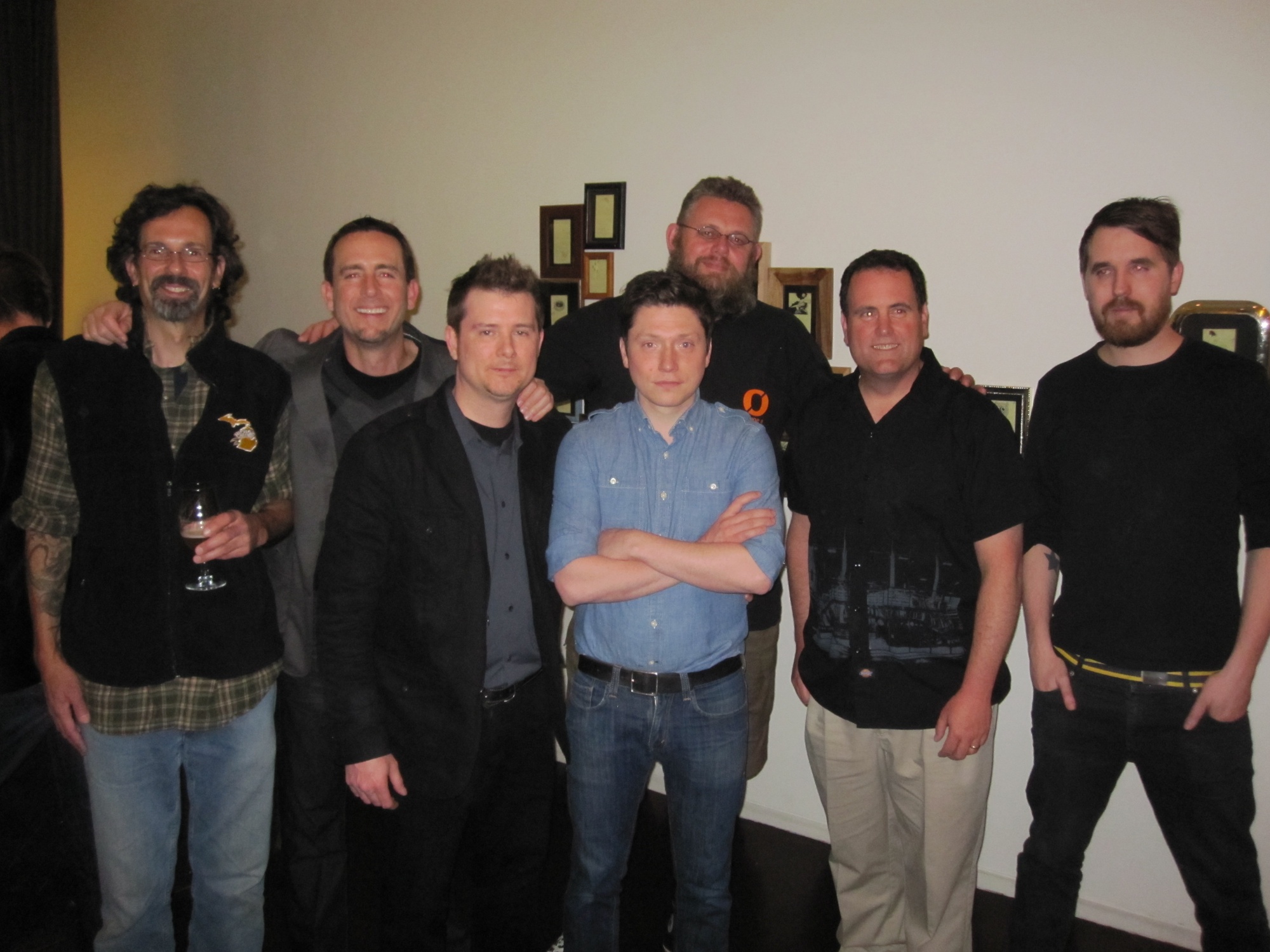
Jolly Pumpkin, Stone & Nøgne Ø at Blackbird
Events ranged from special beer dinners, beer tastings, brewer meet-and-greets, bus trips – pretty much everything you’d see in a typical craft beer week – but exclusive to conference attendees or those in-the-know. It felt that wherever you turned you would run into a brewer to say hi to. I was able to attend the Stone/Jolly Pumpkin/Nøgne Ø collaboration dinner at Blackbird, a “Rare Beer Tour” bus trip hosted by Louis Glunz (a local beer distributor), an Allagash/Avery/Lost Abbey night at the Publican, and interesting beer tappings across the city at spots such as the Map Room, Revolution Brewing, Small Bar, Local Option, Sheffield’s, Bottom Lounge, Delilah’s and others. I was able to meet brewers from across the U.S., try dozens of unique beers and learn a lot in the process. It was truly a great experience and I’m anxiously looking forward to 2011.
Attending the CBC made me think about the craft beer industry back in Canada and if something like the BA could exist and if it would be successful. In Canada, there is not (to my knowledge) an industry organization solely representing the interests of craft brewers from coast-to-coast. There is the Brewers Association of Canada, but it only represents a fraction of craft breweries in Canada and is dominated by the big players.
In Ontario, the Ontario Craft Brewers has been a successful voice of craft beer in the province. Its efforts has resulted in substantial government grants and a strong working relationship with the LCBO, including the release of several multi-brand Discovery Packs and in-store features. But a significant issue in the Ontario beer marketplace, such as The Beer Store, remains unaddressed. And the OCB does not represent all Ontario craft brewers – successful breweries including Amsterdam and Steam Whistle are not members. (Full disclosure – through Free Our Beer’s sister site The Bar Towel we are a partner of the OCB and support their activities). Out west, there also seems to be a B.C. Craft Brewers Association but little content is available on their web site.
Sam Calagione Leading a Seminar
So this begs the question – is now the time for a true ‘Canadian Craft Brewers Association’? The Brewers of Canada is heavily skewed towards the large brewers, so an obvious craft beer issue such as The Beer Store would never be dealt with. The OCB has been successful but it is very regional in focus. Could the unity of craft brewers achieve positive growth and change on a national level? Issues such as inter-provincial free trade, optimal retailing and competitive taxation could certainly be things that the industry would benefit from. And at the very least brewers could share best practices as we have a sizeable country and face time is rare.
However, in effect the CBC was just as much an event for Canadian brewers as it was for Americans. I have never seen so many Canadian brewers at one place as I did at the CBC. The event is a major draw for Canadian brewers from coast-to-coast – it was a place to network and meet other brewers from Canada and abroad, learn and share business strategies and be inspired. No doubt much of this learning was brought home and put into place by our Canadian craft brewers, which is a good thing. But it is clear that the American craft industry is a fair ways ahead of Canada, and we’ve got room to grow when it comes to brewing, retailing and also drinking.
Attending the CBC was enlightening and inspirational. To see how the BA bands together even though they obviously compete with one another every day is fantastic. The BA is equally aggressive with their industry goals as they are with brewing standards and quality. Collaborations, one-offs, seasonals and unique products are driving growth and success for American brewers (for example, Russian River’s Double IPA Pliny the Elder constitutes 60% of their total volume). The United States has a national brewing culture and business climate that allows breweries to flex their creativity and be rewarded for it – but they’re still pushing for more. In Canada the industry needs to follow their lead – set high standards for craft beer, create a better business and retail environment and collectively push forward to be recognized as a top global brewing nation.
What’s interesting now that Free Our Beer has been going for a couple of years (god, time has flown by) is to see how things have changed (or haven’t) over time.
For instance, we’ve tracked the process to get Garrison’s Imperial I.P.A. onto LCBO store shelves as part of its Autumn Ales release. This has been a big win for beer lovers in the province as it’s truly a great beer and a testament to the LCBO doing some positive things to help push craft beer forward.
On the absolute opposite hand is The Beer Store. The Beer Store is Ontario’s government-sanctioned, exclusive corporation authorized to sell beer in the province (save for the LCBO itself and breweries on their own premises). The Beer Store is a disaster as a craft beer operation, an entity (in my opinion) made to resemble what people would think of as government retail to distract from the fact that is a privately-held, foreign-owned for-profit corporation. It’s a factory for buying beer, offering a terrible in-store experience and weak selection in craft beer terms. So it’s about time that a couple of posts are dedicated to The Beer Store so readers can learn a bit more about this “Ultimate Source for Beer“.
A couple of years ago I wrote about The Beer Store’s beer merchandise on their site. It was pretty basic, offering a couple of glasses and no craft beer merchandise at all. Well, I’m sad to say that it hasn’t improved one bit.
Their technology has – The Beer Store now offers a full e-commerce site Shop The Beer Store. But what’s available is utterly sad if you’re interested in actual beer merchandise. The site looks more like a sports paraphernalia store, with products grouped by sports league – NHL, CFL, UFC, that kind of thing. You can get yourself such items as BBQ covers, garden gnomes and solar stepping stones, all branded with your favourite teams. There are glasses and beer cozies, but they’re all sports-branded rather than brewery branded. Feels a lot like the kind of stuff you can get for free inside a megabrand 24.
But what about actual craft beer merchandise? Well, if you go to “Beer Gear“, there’s precisely two items – a “Canada” ball cap and a “Got Beer?” ball cap. That’s it. How about a Maudite tulip glass to go with the same beer that The Beer Store sells? Nope. How about craft beer branded bottle openers, coasters, posters, anything? Again, sadly, no.
It’s clear that branded craft merchandise isn’t of interest to The Beer Store. Perhaps they just don’t want it, perhaps they’ve made it difficult for breweries to supply merchandise due to red tape or other policies. But the reason isn’t as important as this: The Beer Store boasts to be the “Ultimate Source for Beer” in Ontario and by creating an e-store that so seriously under-delivers on its own claim is both hypocritical and pathetic. And as Ontario’s only authorized beer retailer, they are under-servicing the needs of the craft beer drinker, and this is just one example of how it does so.
In conclusion, I can understand why the selection is what it is – The Beer Store’s target market is predominately mass-beer drinkers rather than craft enthusiasts. But craft beer is a legitimate and growing segment of the beer market. If The Beer Store won’t service craft drinkers the way that they deserve to be, an alternative must be made available.
As we mentioned earlier in December, the Alberta Gaming and Liquor Commission (AGLC) strangely and for no apparent logical reason banned beers for sale in the province that exceeded 11.9% alcohol. This quickly led to an outcry from many in the beer community – from drinkers and importers alike. It certainly was a ridiculous policy and one seemingly made with an uninformed view of craft beer.
But we’re happy to see that our friends in Alberta can now drink their strong beer again. The AGLC announced that high alcohol beer can once again flow into the province, with an increased tax structure. So whereas beer that is less than 11.9% will be charged the provincial markup of anywhere from $0.20 to $0.98 per litre, beer above this threshold will be marked up anywhere from $4.05 to $13.30 per litre, depending on strength.
So, a couple of things about this. First, the original decision made should never have happened. As discussed over at The Bar Towel, it seems that a couple of BrewDog beers coming into the province is what triggered the decision. Looks like the governing body freaked out at the sight of something they have never seen (or rarely seen) before. But even doing some quick research online would show that these beers are legit and really not the kinds of products that consumers would abuse. So, this indicates that the AGLC could use a bit more education when it comes to craft beer, and hopefully this process has done so.
Second, it is impressive to see the quick reaction to fix what obviously became a public relations challenge for the AGLC. I don’t live in Alberta but some of the content of the AGLC’s web site speaks to how great privatization is, so one would hope that part of that would include a lack of meddling in the business of alcohol, although this proved otherwise. However, in the course of a couple of weeks the AGLC did reverse their decision, which was a good thing. To contrast against Ontario, we have some examples (Delirium Tremens, Samichlaus, etc.) where the LCBO ‘overreacts and bans’ but then they never change their stance, no matter what the PR outcome is.
In the end, consumers get their strong beer back, importers get to bring it in again and the AGLC gets more money in the process. Everyone wins, right?
We often bemoan the state of drinking in Ontario – the selection, the policies, etc. In fact, this site is dedicated to presenting arguments why the retail system does not suit the beer connoisseur. However, I recently came across a fascinating web site that shows that things in Ontario were much stranger for drinkers.
The site, Punched Drunk, Alcohol, Surveillance and the LCBO, 1927-1975, is a companion to the book of the same name, written by Gary Genosko and Scott Thompson. The site (and book) presents some of the various tools that the LCBO used to track alcohol consumption in Ontario, and it’s pretty amazing to think that some of these procedures were in place right up until the mid-70s.
For instance, consumers needed to have a liquor permit, which seemed to be like a driver’s license, which was required to purchase alcohol and had to be carried around. When someone purchased liquor, they needed to fill out a form. But in what is a pretty shocking manner, the LCBO also kept track of individual purchases, and could decide to forbid sales to consumers (a process called “interdiction”). The site speaks to the different policies and has reproduced some original LCBO documents to take a look at.
It’s incredible and interesting to think about a time where these and other policies were the norm and a part of daily life. And although things have significantly changed in the 35 years since the end of these policies, it’s still important to understand that our alcohol sales are still controlled by the same entity now as in the past. After all, the LCBO continues to make decisions about what is available for sale based upon social judgements.
The kinds of extreme policies from Punched Drunk will likely never be seen again, but it is important that we continue to push for modernization to benefit connoisseurs in Ontario.
Hugh MacIntyre has an editorial today in National Post where he questions some of the liquor laws in Ontario after a recent trip to California and Oregon. In the editorial he touches upon beer availability, retail sales and direct shipping, all things that are challenging if not illegal in Ontario. I feel your pain Hugh, thinking about Ontario in comparison to California is terribly frustrating.
Hugh’s blog, “Freedom is My Nationality” also touched upon beer just last week, mentioning and quoting the Buffalo News article on The Bar Towel’s bus trip to Buffalo, also discussing the beer legal situation in Ontario.
Keep it up Hugh, we need more people aware of the issues and speaking their mind that we are in the dark ages when it comes to beer in Ontario. We need to make these issues worthy of serious consideration alongside other classic political issues with voters and government. It’s the only way we’re ever going to see change.
It’s been a little while since our last post at Free Our Beer, but it isn’t due to lack of things happening. There’s lots going on and some interesting news will be announced soon. But I thought I’d post up some quick tidbits of things on the radar in the Free Our Beer world across the country. First up, in Ontario:
Our first beer to be released at the LCBO, Garrison’s Imperial I.P.A., came and went pretty quickly as part of the Autumn release. It sold very well as part of the release and I think it’s safe to say a sure-bet for next year’s Autumn release again. Thanks to everyone who bought the beer, and if you can’t wait until next fall we’ll be continuing with private orders throughout the year. Watch The Bar Towel for the latest.
Over at The Bar Towel, our recent bus trip to the Blue Monk in Buffalo, NY was featured in the Buffalo News, which included a mention of Free Our Beer. I had a nice discussion with the author of the article after the trip and he was genuinely interested in how things worked in Ontario. Compared to the generally open rules around beer in New York state, when compared to a place ‘just across the river’ it is certainly very different.
Now let’s show a little love to our fellow Canadian beer lovers, as there’s some interesting things brewing in the West:
As tipped off by Bar Towel writer Derek Hyde, Kelowna MP Ron Cannan recently introduced a motion in the House of Commons to amend our federal liquor laws and allow direct purchasing of wine from wineries by consumers. There’s a post over at the Just Grapes blog that mentions this news as well and hints towards beer being included. Although this is certainly a positive move towards liquor law reform, it’s important to point out that this motion is specifically wine. Wine has traditionally been a politically safer subject than beer and this seems to be the case still. In fact, after seeing the news I sent a quick note to Mr. Cannan who promptly wrote me back on the subject:
“My motion deals specifically with wine but it’s quite possible that if the law is ever changed pressure might come to bear for other types of beverages, especially those from small craft brewers.”
So if this motion gains traction and ever becomes law, unfortunately beer is excluded. However, its a step in the right direction for sure. Would be great to be able to order from craft breweries directly at some point in the future, but we need to include beer in the conversation alongside wine when liquor reform is concerned.
In neighbouring Alberta, the provincial liquor commission strangely and quietly introduced a new policy that has banned the sale of any beer over 11.9% alcohol/volume. It was reported in the Fast Forward Weekly blog and just this week hit major media with a story and radio segment on CBC. The CBC story has generated a lot of talk and rightly so. This policy is completely ridiculous and demonstrates a total ignorance of craft brewing.
A representative from the liquor commission claimed in the CBC radio segment that “social responsibility” was one of the reasons behind the decision. Certainly sounds familiar for us in Ontario but thankfully there isn’t any kind of regulation that exists of the sort here (although there is an alcohol limit on brewpub-produced beers). For a province that seemingly has the most open system regarding alcohol in Canada (their alcohol system was privatized in the ’90s) this is truly unfortunate for beer lovers in Alberta. We at Free Our Beer support full access for craft beer drinkers all across the country and we’ll watch this story closely and assist however we can.

 Loading ...
 The LCBO’s Social Responsibility group is in the news again, this time for the rejection of the Flying Monkeys Smashbomb Atomic IPA. Torontoist has an article posted today about the story, with examples of some of the past controversies of other products that aren’t on LCBO shelves due to similar issues. Over at The Bar Towel there is a discussion forum thread where beer lovers in the province have piped up, including Flying Monkeys owner Peter Chiodo himself. Both are worth a read to learn about this important issue and how the LCBO continues to flex their muscle in the beer world in Ontario – when beer itself isn’t even concerned. I’ve said it before folks, don’t forget the “C” in LCBO stands for “Control”. Extra shout out to Torontoist for recalling and linking to our Buffalo/Blue Monk bus trip article, in which Free Our Beer was discussed.
 In similar news, and which shows a total contrast in brewery attitude in the United States, the Flying Dog brewery of Frederick, Maryland has sued the Michigan Liquor Commission over their banning of their Raging Bitch brand, citing freedom of speech rights. Looks like numerous flying animal breweries are having issues with the regulators this week.
 (4 votes, average: 4.25 out of 5)
 Loading...
 Free Our Beer is hitting the road again tomorrow for the annual
 As
As 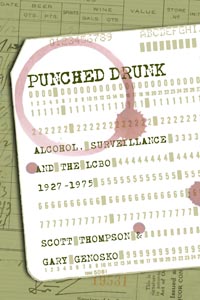 We often bemoan the state of drinking in Ontario – the selection, the policies, etc. In fact, this site is dedicated to presenting arguments why the retail system does not suit the beer connoisseur. However, I recently came across a fascinating web site that shows that things in Ontario were much stranger for drinkers.